Salvaged, Stitched, and Singular: How Deadstock Fabric Is Rewriting the Rules of Intentional Design
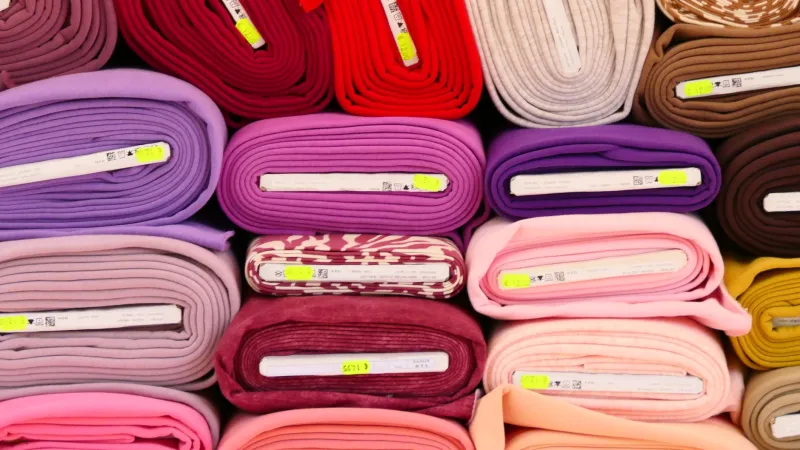
There is a particular kind of beauty in the accidental archive. Somewhere in a warehouse on the outskirts of Los Angeles, or in the back rooms of a textile mill in the Carolinas, bolts of fabric sit in careful stasis — ordered in optimism, abandoned by circumstance, waiting for a purpose that standard industry logic never arrives to provide. These are deadstock textiles: surplus yardage generated by manufacturing overruns, canceled orders, and the chronic overestimation that defines conventional apparel production. For decades, much of this material ended up incinerated, landfilled, or left to slowly degrade. Today, a new generation of American designers has decided that such an outcome is not only wasteful but creatively inexcusable.
Deadstock fashion — the practice of building collections entirely or substantially from pre-existing surplus fabric — has moved well beyond its origins as a budget-conscious workaround. It has matured into one of the most intellectually serious movements in contemporary design, one that demands equal parts resourcefulness, restraint, and vision.
The Material Reality of Fashion's Waste Problem
To understand why deadstock sourcing matters, it helps to appreciate the sheer scale of the problem it addresses. The global fashion industry produces an estimated 92 million tons of textile waste annually, according to the Ellen MacArthur Foundation. A significant portion of that figure originates not at the consumer end of the pipeline but at the production stage itself — fabric that never became a garment, thread counts that never met a pattern piece.
In the United States specifically, the fast fashion model accelerated this surplus by incentivizing overproduction as a hedge against stockouts. Brands ordered more than they needed; mills wove more than they could sell. The result was a shadow inventory of extraordinary materials — Japanese selvedge cottons, Italian wool blends, deadstock silks originally destined for luxury houses — accumulating in storage facilities across the country and around the world.
Designers working with deadstock are, in effect, intercepting this material before it reaches an irreversible end point. The environmental calculus is compelling: no new fiber cultivation, no virgin dyeing, no additional water consumption for raw material processing. The carbon footprint of a deadstock garment is structurally lower than its conventionally produced counterpart from the very first stitch.
Scarcity as a Design Principle
What distinguishes the most thoughtful deadstock practitioners from mere opportunists is the degree to which limitation becomes generative rather than restrictive. When a designer secures forty yards of a discontinued Italian bouclé or sixty meters of a mill-end linen, that quantity is absolute. There will be no reorder. The collection must be conceived around what exists, not what is theoretically possible.
New York-based label Mara Hoffman has long incorporated deadstock and low-impact materials into its production model, treating finite yardage as a creative constraint that sharpens decision-making rather than diminishing it. Similarly, Christy Dawn — founded in Los Angeles and deeply committed to regenerative and deadstock sourcing — has built an entire brand identity around the idea that a garment's material provenance is inseparable from its meaning. Their collections read as a kind of wearable archaeology: each piece traceable to a specific bolt, a specific moment in textile history.
Smaller independent labels have taken this philosophy even further. Designers operating out of Brooklyn, Portland, and Chicago are sourcing deadstock through specialized brokers and mill-direct relationships, then producing micro-runs of ten, twenty, or thirty pieces — numbers that make mass retail economics impossible but create something genuinely extraordinary for the consumer who finds them. These are not limited editions in the marketing sense. They are limited by material reality, which is an entirely different and more honest proposition.
The Logistics of the Salvage
Building a deadstock-based collection is considerably more complex than ordering fabric from a standard supplier catalog. The supply chain operates on a different logic entirely — one governed by availability windows, irregular yardage quantities, and the need for rapid decision-making when desirable material surfaces.
Deadstock brokers serve as crucial intermediaries in this ecosystem. Companies such as Fabscrap in New York and Recovo in the broader North American market aggregate surplus from manufacturers, mills, and brands, making it accessible to independent designers who lack the purchasing power to source directly at scale. These platforms have professionalized what was once an entirely informal network of tips and personal relationships, bringing transparency and accessibility to a market that previously favored only those with deep industry connections.
For the designer, the challenge lies in building collections that can accommodate variability. When your primary material might arrive in three colorways rather than five, or when a particular fabric runs short by fifteen yards, the design process requires a flexibility that conventional production schedules rarely permit. Many deadstock-focused brands have responded by embracing made-to-order models, which neatly solve the surplus problem at their own production stage while allowing them to allocate every yard of sourced material with precision.
What the Conscious Consumer Should Understand
For the design-conscious American consumer, deadstock fashion offers something that the broader market rarely delivers with authenticity: genuine singularity. A piece constructed from a discontinued fabric is, by definition, unrepeatable. When the yardage is gone, it is gone. This is not artificial scarcity manufactured by a marketing department; it is the natural consequence of working with finite material.
This understanding should inform how consumers approach deadstock pieces — both in terms of acquisition and care. These garments merit the same consideration one might extend to a well-chosen vintage find or a piece of artisan craft. They exist at the intersection of someone else's surplus and a designer's ingenuity, which gives them a layered provenance that mass-produced clothing simply cannot replicate.
It is also worth noting that deadstock sourcing, while genuinely sustainable, is not a complete solution to fashion's systemic challenges. The practice addresses waste at the material level but does not automatically resolve questions of labor equity, chemical processing, or end-of-life disposal. Discerning consumers would do well to seek out brands that pair deadstock sourcing with transparent labor practices and considered finishing processes — those for whom sustainability is a holistic commitment rather than a single-axis talking point.
The Aesthetic Argument
Perhaps the most underappreciated dimension of the deadstock movement is the purely aesthetic one. Surplus fabric from previous decades often carries a quality and character that current production cannot easily replicate. Mills that once wove for couture houses or produced for markets with stricter material standards generated textiles of remarkable hand and density. When a contemporary designer works with this material, the resulting garment carries a tactile richness that registers immediately — even to someone who cannot articulate why.
There is something deeply evocative about wearing a fabric that has its own history, its own interrupted trajectory. The conscious consumer who chooses a deadstock piece is not simply making an ethical statement. They are participating in an act of material reclamation — giving form and function to something that came perilously close to disappearing entirely.
In a fashion landscape saturated with novelty and noise, that quiet act of salvage may be the most sophisticated statement of all.