The Eloquence of Restraint: Understanding the Cultural Shift Toward Quiet, Craft-Centered Dressing
For much of the past three decades, luxury fashion communicated through volume. The larger the monogram, the more visible the hardware, the more unmistakable the brand signal, the clearer the message of arrival. This was, in retrospect, a particular kind of insecurity dressed as confidence — a need to borrow the authority of a recognizable name because the wearer's own authority felt insufficient on its own.
Something is shifting. Across American cities, among a cohort of consumers who are educated, financially established, and increasingly skeptical of conventional status markers, the loud declaration is giving way to something considerably more demanding: the quiet one. This movement — variously described as "quiet luxury," "stealth wealth," or simply "old money aesthetic" in the shorthand of social media — represents more than a trend cycle. It reflects a fundamental recalibration of what sophisticated dressing is for.
What Quiet Luxury Actually Means
Before examining the cultural forces driving this shift, it is worth being precise about what quiet luxury is — and, perhaps more importantly, what it is not.
Quiet luxury is not minimalism in the reductive sense. It is not an absence of intention or an embrace of the generic. It is, rather, a redirection of attention: away from surface signaling and toward the qualities that reveal themselves only to those with the education to perceive them. The weight of a cashmere coat. The way a well-cut trouser breaks at precisely the right point on the shoe. The subtle variation in a hand-loomed textile that distinguishes it from its machine-produced equivalent. These are not details that announce themselves. They reward looking.
Nor is quiet luxury synonymous with any single price point, though it tends to concentrate at the upper end of the market where the economics of genuine craftsmanship are possible. A beautifully constructed wool coat from a heritage American brand, worn for two decades and resoled when necessary, is an expression of quiet luxury. A $4,000 jacket covered in a brand's initials is not — regardless of what the label says.
The Brands Defining the Conversation
Several labels have become reference points for this aesthetic, each approaching restraint from a distinct tradition.
The Row, founded by Mary-Kate and Ashley Olsen in 2006, has become perhaps the defining American expression of quiet luxury. Its garments are characterized by exceptional fabrication, rigorous construction, and a near-total absence of branding. The Row's prices are substantial — a cashmere coat may exceed $5,000 — but the investment is legible through the garment itself rather than through any external signifier. The brand has cultivated a devoted following among creative professionals, architects, and fashion insiders who regard its pieces as something closer to objects than clothing.
Loro Piana, the Italian heritage house now under LVMH ownership, has long occupied this territory. Its signature materials — vicuña, baby cashmere, lotus flower fiber — are among the rarest and most labor-intensive textiles in the world. The brand's logo appears, when it appears at all, as a small woven label. The quality of the material is the communication.
In the American market, Quince and Everlane occupy a more accessible tier of the same philosophical space, prioritizing material transparency and construction quality over branding expenditure — though the category's most committed practitioners generally look to heritage European houses and independent American designers for their most significant acquisitions.
Reading Quality: A Practical Vocabulary
The shift toward craft-centered dressing requires developing a literacy that retail culture has not historically encouraged. Most American consumers have been trained to evaluate clothing by brand recognition, trend alignment, and price point. Quiet luxury demands different tools.
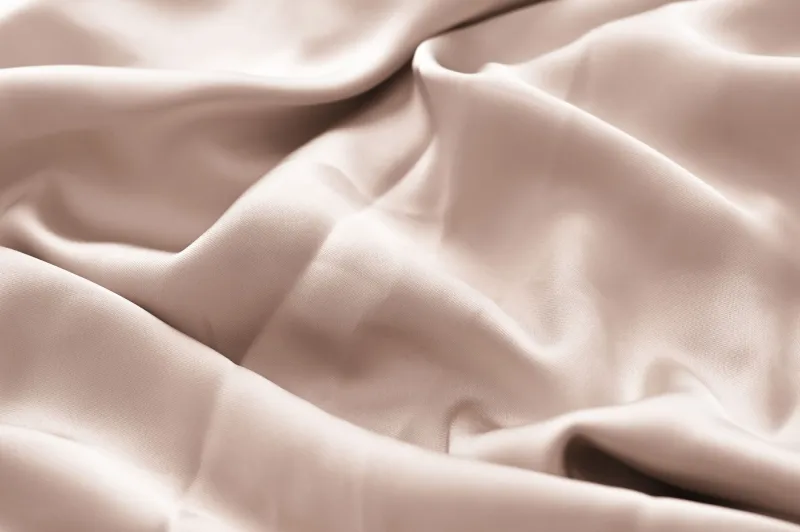
Fabrication is the first and most important indicator. Natural fibers — wool, cashmere, silk, linen, cotton — have inherent characteristics that synthetic alternatives cannot replicate: breathability, drape, the capacity to age gracefully rather than degrade. Within natural fibers, grade matters considerably. Mongolian cashmere from a reputable mill is not equivalent to the cashmere-blend knitwear found at a fast-fashion retailer, regardless of what the label claims. Learn to feel the difference: genuine high-grade cashmere has a particular softness and weight, and it does not pill aggressively with regular wear.
Construction reveals itself in the details that manufacturers cut first when reducing costs. Examine interior seams: a well-made garment finishes its interior with the same care as its exterior, because the maker understands that quality is not a performance for observers — it is a standard applied consistently. Check how pattern pieces are matched at seams; quality tailoring aligns stripes, plaids, and checks across joins. Observe buttonholes: hand-stitched buttonholes have a slight irregularity and density that machine-made versions cannot replicate.
Fit architecture — the way a garment is proportioned and cut to accommodate the human body in motion — is perhaps the most difficult quality to articulate but the easiest to perceive. A well-cut jacket allows the shoulder to move without restriction while maintaining its line. A properly constructed trouser falls cleanly from the hip without pulling or gaping. These outcomes are not accidental; they are the result of pattern-making expertise and fitting iterations that cheaper production processes cannot afford.
The Cultural Argument
Why now? The timing of quiet luxury's ascent is not incidental. It emerges against a specific cultural backdrop: the aftermath of a pandemic that forced a reckoning with consumption habits, the growing mainstream awareness of fashion's environmental costs, the increasing skepticism among younger affluent consumers toward the performative dimensions of traditional luxury, and a broader cultural conversation about authenticity that has made conspicuous displays of any kind feel slightly exhausted.
There is also a generational dimension. Millennial and older Gen Z consumers who have achieved financial stability — often through careers in technology, finance, design, or the creative industries — are demonstrating a different relationship to status than their predecessors. Research consistently shows that this cohort values experiences, knowledge, and alignment with personal values over conventional markers of success. A wardrobe built on craft and intentionality maps onto those values in a way that a logo-heavy one does not.
Sustainability as Aesthetic Logic
The quiet luxury movement and the sustainability movement are not parallel trends — they are, at their foundations, the same argument expressed through different vocabularies. Both reject the disposability model that has defined mainstream fashion for thirty years. Both insist on the value of things made to last. Both require the consumer to develop genuine knowledge rather than rely on brand authority as a substitute for judgment.
When you invest in a coat built from exceptional materials and constructed to be repaired rather than replaced, you are making a statement about how you believe objects should exist in the world. You are voting, with your expenditure, for a different model of production — one that externalizes fewer costs onto the environment and onto the workers who make the things we wear.
This is, ultimately, what separates quiet luxury from mere aesthetics. It is not simply a preference for the understated over the ostentatious. It is a coherent position on the relationship between quality, longevity, environmental responsibility, and genuine taste. The restraint is not the absence of a statement. It is the statement itself.