The Mirror Before the Closet: Why Self-Knowledge Is the Only Capsule Wardrobe Strategy That Works
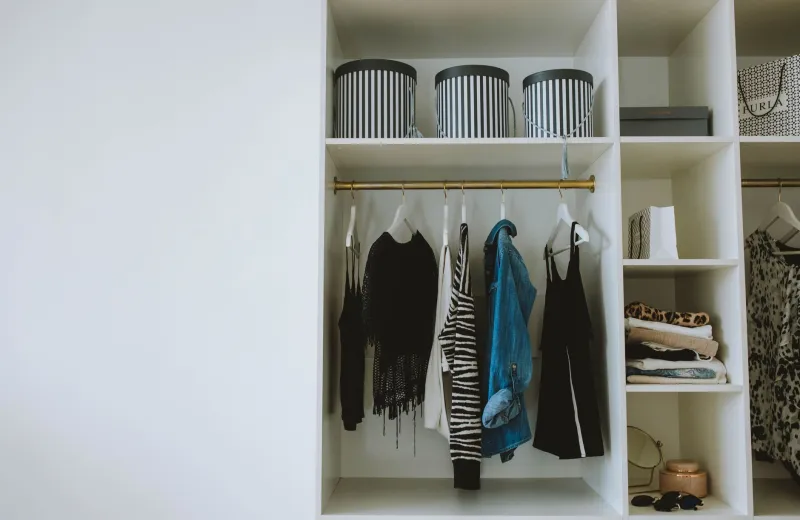
There is a particular kind of optimism that descends every January, every spring cleaning season, every time a certain kind of aspirational content floods your feed. It is the conviction that if you could just reduce your wardrobe to thirty-three pieces—or twenty, or ten—your mornings would become serene, your choices purposeful, your relationship with clothing finally resolved. You buy the matching velvet hangers. You download the checklist. You donate four bags to the thrift store. And then, within three months, the closet has quietly refilled itself, the anxiety has returned, and the capsule wardrobe has joined the long list of systems that worked beautifully in theory.
This is not a personal failure. It is a design flaw in the way minimalism has been marketed to us.
The dominant narrative around capsule dressing treats the wardrobe as the problem to be solved. Clear it out, the logic goes, and clarity will follow. But this inverts the actual order of operations. A functional, reduced wardrobe is not the starting point of self-knowledge—it is the result of it. Attempting to build one without that foundation is like designing a house before you know how many people will live in it, or what they do for a living, or whether anyone needs a studio or a garden. The structure will be elegant, perhaps, but it will not fit the life.
The Aspiration Gap
Consider the wardrobe most capsule guides prescribe: a trench coat, white button-downs, tailored trousers, a little black dress, clean leather sneakers. It is a wardrobe that photographs beautifully and functions well for a very specific kind of life—one lived largely in temperate urban environments, in professional or semi-professional contexts, with a preference for understated European-influenced aesthetics. For a significant portion of the American population, that description fits reasonably well. For the rest, it represents someone else's life entirely.
A kindergarten teacher in Austin, a freelance muralist in Detroit, a trial attorney in Chicago who also coaches youth soccer on weekends—each of these people has a wardrobe logic that is genuinely distinct, shaped by the physical demands of their days, the social codes of their environments, and the emotional registers they need their clothing to support. A capsule wardrobe built on universal prescriptions will fail all three of them, not because they lack commitment, but because the template was never theirs to begin with.
The aspiration gap—the distance between the life you imagine when you look at a minimalist wardrobe and the life you are actually living—is where most capsule experiments collapse. We purchase the ideal rather than dressing the reality.
What Self-Awareness Actually Demands
Building a wardrobe that genuinely serves you requires a form of self-inquiry that is more rigorous, and more honest, than most style advice encourages. It begins not with what you want to look like, but with what you actually do.
Start with a week of observation rather than action. Before removing a single item from your closet, spend seven days noticing what you reach for instinctively—not what you feel you should wear, but what your hand moves toward first. Notice the texture, the silhouette, the level of formality. Notice what you put on when you are tired, when you are anxious, when you want to feel capable. These patterns are not arbitrary. They are data.
Then examine the gap between your aspirational purchases and your actual habits. Most of us own at least one category of clothing that represents who we imagine we might become: the structured blazers for the person who attends more dinner parties, the athletic wear for the person who runs in the mornings, the silk blouses for the person whose life requires a certain elegance. These pieces are not failures of willpower. They are maps of unlived versions of yourself. A functional capsule requires that you reckon with which of those versions you are actually building toward—and which you are ready to release.
The Temperament Question
Style temperament is among the most underexamined variables in wardrobe planning, and it may be the most consequential. Some people experience clothing as a form of daily self-expression, deriving genuine pleasure from variation, unexpected combinations, and the creative act of getting dressed. For these individuals, a severely reduced wardrobe is not liberating—it is depleting. The capsule, as conventionally prescribed, asks them to trade a source of joy for an aesthetic ideology.
Others experience clothing primarily as a practical system. They want to get dressed efficiently, present appropriately, and redirect their cognitive energy elsewhere. For them, reduction is genuinely freeing, and a tightly edited wardrobe functions like a well-designed tool.
Neither temperament is more evolved or more aligned with conscious consumption. What matters is that your wardrobe strategy is calibrated to your actual relationship with clothing, not to someone else's. A person who loves getting dressed can build a considered, intentional, even minimal-by-their-own-standards wardrobe that still contains more variety than a standard capsule template. The goal is not a specific number. The goal is the elimination of everything that does not serve you—and that requires knowing, first, what serving you actually looks like.
A Framework for Honest Editing
Once you have observed your habits and examined your temperament, the editing process becomes far less fraught. Rather than measuring your wardrobe against an external checklist, you are measuring it against a self-portrait you have taken the time to develop.
Begin by identifying your actual life categories—not idealized ones. If you work from home four days a week, your wardrobe needs to reflect that reality, not the office life you had in 2019. If you live in a climate with genuine seasonal extremes, a capsule that ignores layering is a capsule that will fail you every November.
Next, audit your existing pieces against a simple but demanding standard: does this item fit my body as it is today, suit at least two distinct contexts in my actual life, and align with the aesthetic sensibility I have identified as genuinely mine? If any of those three conditions fails, the piece is a candidate for removal—regardless of how much it cost, how recently you purchased it, or how much you believe you should love it.
Finally, resist the urge to fill gaps immediately. One of the more counterintuitive truths of intentional dressing is that living with absence for a period often clarifies whether the gap is real or imagined. The impulse to complete a capsule can become its own form of overconsumption, simply with better curation.
Minimalism as Outcome, Not Method
The capsule wardrobe, at its best, is not a system you impose on your life. It is a portrait of a life you have already taken the trouble to understand. The brands and stylists who have reduced it to a checklist have done the concept a disservice, flattening something genuinely demanding into something that looks achievable over a long weekend.
Owning less is, in the end, a byproduct of knowing yourself better—your rhythms, your needs, your honest pleasures, and the version of yourself you are actually committed to becoming. That knowledge is harder to acquire than a set of matching hangers. It is also considerably more durable. And it is the only foundation on which a wardrobe that truly works can be built.